
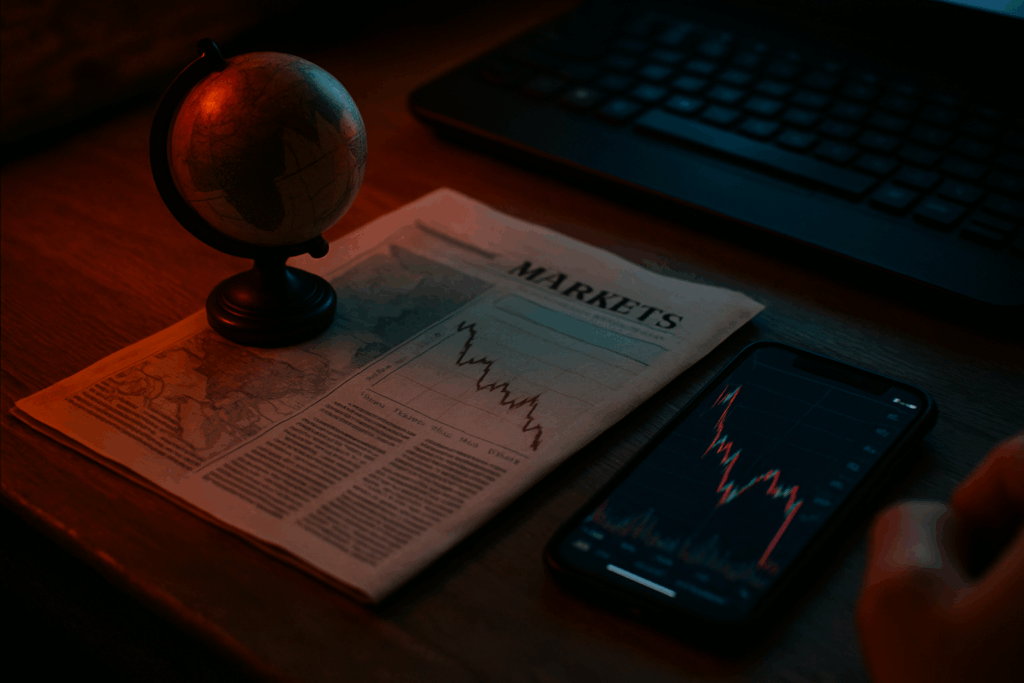
What Geopolitical Instability Actually Means
Geopolitical instability isn’t just war on the front page. It’s sanctions passed overnight, elections too close to call, and regimes collapsing before the markets can price in the fallout. Conflict gets headlines, but it’s often the less visible shifts an ousted leader, a policy pivot, or a diplomatic freeze that rattle markets first.
Volatility feeds on uncertainty. The minute investors can’t see around the corner, they start pulling back or shifting capital. This reaction isn’t always about the severity of the event, but the unknowns it creates. A small country’s election might not move oil prices, but a trade conflict between heavyweights can shake entire sectors.
Still, there’s a gap between perception and reality. Markets often react swiftly to the mere risk of disruption, pricing in worst case scenarios long before actual economic damage shows up. For analysts and investors, that means separating noise from signal reading not just what’s happening, but what it could really mean on the balance sheet.
Immediate Market Reactions
When geopolitics swerve, markets flinch. The stock market doesn’t wait around it reacts fast and hard. At the first hint of instability, whether it’s a coup, a military escalation, or even an uncertain election outcome, investors dump riskier assets. The result? Indexes slide, portfolios get jittery, and money starts moving.
Currency markets are no more forgiving. Capital exits regions viewed as unstable, chasing safety in stronger economies or time tested currencies. That kind of capital flight can hammer local currencies and inject even more chaos into an already fragile situation. In return, central banks often scramble, raising interest rates or dipping into reserves.
But not all sectors get dragged down equally. Defense stocks usually surge around conflicts investors see predictable government spending and steady demand. Energy markets shift fast too; disruptions in oil or gas supply chains push prices up, boosting producers. And for tech, it’s complicated. Companies with global exposure may get sideswiped, while cybersecurity firms can see a sudden windfall. When the world shakes, the market doesn’t treat every corner the same.
Long Term Economic Ripples
Geopolitical instability doesn’t just send shockwaves through the markets overnight it often triggers broader, longer lasting economic consequences. Understanding these ripple effects is vital for investors, businesses, and analysts navigating uncertain geopolitical landscapes.
Supply Shocks and Inflationary Pressure
One of the immediate consequences of geopolitical disruption is a breakdown in the global supply chain. Whether it’s blocked trade routes, sanctions, or disrupted production:
Supply shortages put upward pressure on consumer prices
Delays in essential goods (e.g., food, fuel, semiconductors) intensify inflation
Producers absorb higher input costs, often passing them to consumers
This chain reaction contributes significantly to long term inflationary trends, especially in economies heavily reliant on imports.
Commodities Under Pressure
Raw materials often become political weapons or bargaining chips. In periods of instability, prices of key global commodities tend to soar, regardless of actual demand:
Oil: Sensitive to even the rumor of supply disruption, oil can spike quickly affecting energy costs worldwide
Metals: Copper, nickel, and rare earth elements become more valuable due to their strategic importance in technology and defense
Food staples: Export restrictions or weather related crises in a politically tense region can disrupt food security and pricing globally
The Rewiring of Global Trade
Geopolitical friction often leads countries to rethink their trading partners and alliances. What follows is a recalibration of trade patterns:
Friend shoring and near shoring replace traditional globalization routes
Bilateral agreements gain importance over multilateral ones
Businesses re evaluate their market entry strategies based on geopolitical risk, not just demand
These shifts don’t just affect exporters and importers they alter manufacturing hubs, labor costs, and even innovation flows.
Long term market performance is increasingly tied to how countries and companies adjust their global strategies in response to these complex dynamics.
Business Strategy During Global Tension
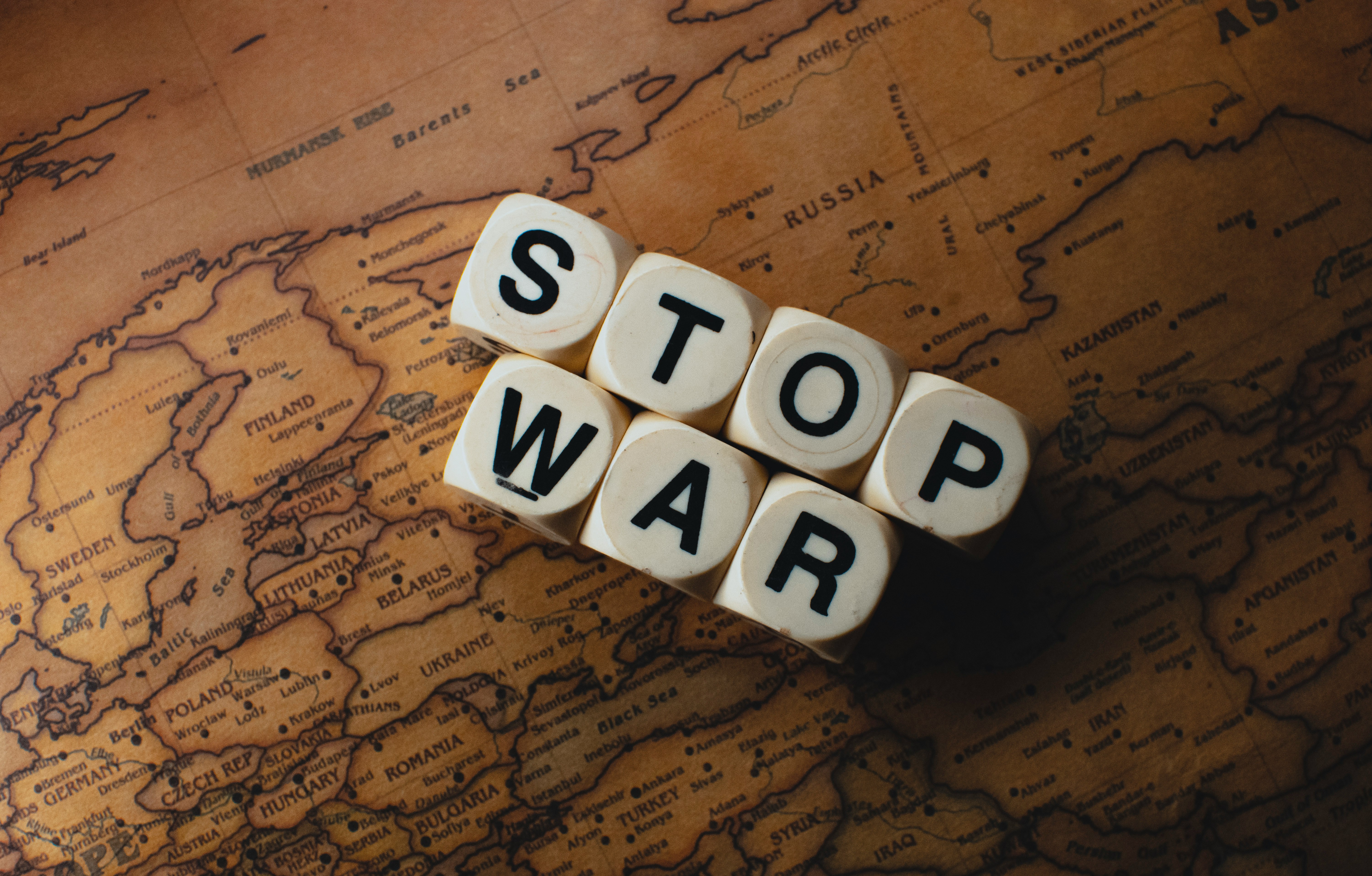
When geopolitics heat up, money moves fast and carefully. Investors typically shift into defensive mode, parking capital in assets that hold up under pressure. Precious metals like gold and silver rise to the occasion not because they generate income, but because they represent safety when the rulebook starts burning. Defensive stocks think utilities, healthcare, and consumer staples also get an inflow boost. These sectors offer predictability, even when headlines don’t.
On the corporate side, risk looks different. Multinationals are pulling back from overexposure to unstable regions. It’s no longer about chasing the cheapest labor or biggest tax break. Now it’s about operational resilience. That means reassessing where they’re located, who they rely on, and where the cracks might show if a policy change or border conflict flares up.
This calculus is driving a rise in supply chain diversification. Companies aren’t just looking for ‘backup suppliers’ anymore they’re reengineering logistics to create agility. That might mean sourcing from multiple continents instead of one, or investing in local production to sidestep export bans. Political risk insurance is another line item now not a luxury, but a line of defense.
In short, stability is the premium product. And smart capital, whether institutional or operational, is chasing it with more urgency than ever.
The Link to Consumer Confidence
Geopolitical instability doesn’t just shake financial markets it trickles down into the daily decisions of everyday consumers. When global tension escalates, political uncertainty can directly influence how much people spend, where they spend it, and how confident they feel about the future.
Economic Fear Shapes Spending Habits
Uncertainty breeds caution, and consumers tend to hold back when they sense risk in the broader economy. Political instability can reduce household confidence, which leads to:
Delayed purchases on non essentials
A pullback on high cost items like furniture, appliances, and vehicles
A general preference for saving over spending
This shift isn’t just an individual response retailers, consumer brands, and service providers often feel the effects in real time.
Sector Specific Impacts
Some industries are particularly sensitive to uncertainty:
Travel and Hospitality: Fear of global conflict or unrest often leads to canceled vacations and postponed business travel.
Luxury Goods and Durable Items: Big ticket items take a hit as households delay discretionary spending.
Real Estate: Prolonged instability can cause hesitation in homebuying and property investment.
Reading the Signals
For forward thinking analysts and businesses, watching consumer behavior is an early indicator of broader market sentiment. Emerging trends such as value seeking shopping habits and sentiment driven search data can help predict what’s next.
Demand patterns shift faster during uncertain times
Consumer focus realigns with perceived security and stability
Long term loyalty strategies can outperform flash discounts
For a deeper look into these evolving patterns, explore this breakdown on future consumer behavior, which highlights how attitudes and habits adjust in response to global challenges.
What Smart Analysts Watch
When geopolitical sparks fly, smart market players don’t panic they pivot. It starts with watching bond yields. These are often the first indicators of stress. When investors get nervous, they run from equities and flood into government debt, pushing yields down. A sharp drop? That’s anxiety. A steady rise, even amid the noise? That signals resilience or at least denial.
Volatility indexes like the VIX also spike when uncertainty creeps in. They’re not perfect, but they measure raw nerves in the market. Think of them as a public anxiety meter.
Then there are the usual safe havens: gold, U.S. Treasuries, the Swiss franc. If those assets suddenly catch fire, it’s a red flag. People are moving to shelter.
Meanwhile, governments tend to respond to geopolitical pressure with policy pivots things like sudden stimulus packages, trade restrictions, or military spending increases. These policies ripple through markets fast. They’re also deeply political, which means they come with narrative risk: markets react as much to what’s said as what’s done.
And hovering in the background? Central banks. Their job is still inflation control, even if the world’s on fire. If geopolitical concerns drive energy prices higher and they often do central banks may tighten policy to prevent inflation spiraling. Rate hikes in a fragile environment are a tightrope walk. But they still do it.
For analysts, this landscape means constantly scanning the cross section of economic signals, political noise, and emotional reactions. It’s not glamorous. But it’s how you don’t get blindsided.
Looking Ahead
Instability vs. Unpredictability
Markets are surprisingly resilient when geopolitics are tense but what truly rattles them is unpredictability. Investors and institutions can manage risk, but they falter when the rules change suddenly or become unclear.
It’s not chaos itself that shakes markets it’s the inability to forecast outcomes
Predictable conflict has less impact than unexpected developments
Adapting Is a Competitive Advantage
Companies that respond quickly and strategically to changing geopolitical landscapes often outperform their peers. Agility in operations, messaging, and supply chains becomes a market differentiator.
Key traits of resilient businesses:
Fast moving executive decision making
Proactive scenario planning
Flexible supply chains and regional diversification
Reading Global Sentiment Matters
Understanding how investors and consumers are feeling has never been more essential. Sentiment is a leading indicator of movement in both spending and investment on local and global scales.
What smart leaders monitor:
Investor behavior in volatile sectors
Shifts in household spending habits
Regional trends driven by geopolitical news cycles
Learn from Consumer Behavior Trends
Staying ahead in uncertain times means doing more than reacting. It requires anticipating behavior changes, especially at the consumer level. This includes tracking how trust, fear, and optimism shape purchasing decisions.
Stay informed on regional and sector specific behavioral shifts
Use forward looking consumer analytics in strategy planning
Study expert analysis on future consumer behavior to make smarter moves
Being future focused isn’t optional it’s how companies endure and grow during global uncertainty.
 Noralia Zyphandra has opinions about effective marketing strategies. Informed ones, backed by real experience — but opinions nonetheless, and they doesn't try to disguise them as neutral observation. They thinks a lot of what gets written about Effective Marketing Strategies, Business News and Insights, Financial Management Techniques is either too cautious to be useful or too confident to be credible, and they's work tends to sit deliberately in the space between those two failure modes.
Reading Noralia's pieces, you get the sense of someone who has thought about this stuff seriously and arrived at actual conclusions — not just collected a range of perspectives and declined to pick one. That can be uncomfortable when they lands on something you disagree with. It's also why the writing is worth engaging with. Noralia isn't interested in telling people what they want to hear. They is interested in telling them what they actually thinks, with enough reasoning behind it that you can push back if you want to. That kind of intellectual honesty is rarer than it should be.
What Noralia is best at is the moment when a familiar topic reveals something unexpected — when the conventional wisdom turns out to be slightly off, or when a small shift in framing changes everything. They finds those moments consistently, which is why they's work tends to generate real discussion rather than just passive agreement.
Noralia Zyphandra has opinions about effective marketing strategies. Informed ones, backed by real experience — but opinions nonetheless, and they doesn't try to disguise them as neutral observation. They thinks a lot of what gets written about Effective Marketing Strategies, Business News and Insights, Financial Management Techniques is either too cautious to be useful or too confident to be credible, and they's work tends to sit deliberately in the space between those two failure modes.
Reading Noralia's pieces, you get the sense of someone who has thought about this stuff seriously and arrived at actual conclusions — not just collected a range of perspectives and declined to pick one. That can be uncomfortable when they lands on something you disagree with. It's also why the writing is worth engaging with. Noralia isn't interested in telling people what they want to hear. They is interested in telling them what they actually thinks, with enough reasoning behind it that you can push back if you want to. That kind of intellectual honesty is rarer than it should be.
What Noralia is best at is the moment when a familiar topic reveals something unexpected — when the conventional wisdom turns out to be slightly off, or when a small shift in framing changes everything. They finds those moments consistently, which is why they's work tends to generate real discussion rather than just passive agreement.