
Bringing a physical product from an initial concept to store shelves or e-commerce fulfillment centers is a detailed, structured endeavor. Many creators assume that having a brilliant idea is the hardest part of the commercial journey, but execution determines ultimate success. Without a clear framework for development, founders risk spending significant capital on designs that factories cannot produce, products that buyers do not want, or items that fail quality checks upon arrival. Understanding every stage of the lifecycle allows creators to navigate technical choices, protect capital, and deliver a reliable item to customers.
Concept Validation and Market Discovery
Before investing in technical drawings or tooling, product creators must confirm that a genuine market need exists. Early validation saves thousands of dollars by stress-testing assumptions while changes remain inexpensive. The discovery phase begins by defining the exact problem the product solves, identifying target users, and evaluating existing solutions. Creators should analyze direct competitors, review customer complaints on existing market alternatives, and conduct structured user interviews to establish clear performance expectations.
Financial modeling must start alongside market discovery. Founders need to calculate target unit margins early by working backward from an estimated retail price. Factor in anticipated freight costs, customs duties, packaging expenses, and platform fees to determine maximum allowable manufacturing costs. If early unit economics indicate thin margins, adjusting features or materials before engineering begins is far easier than trying to cut costs after building production molds.
Early Engineering and Design for Manufacturability
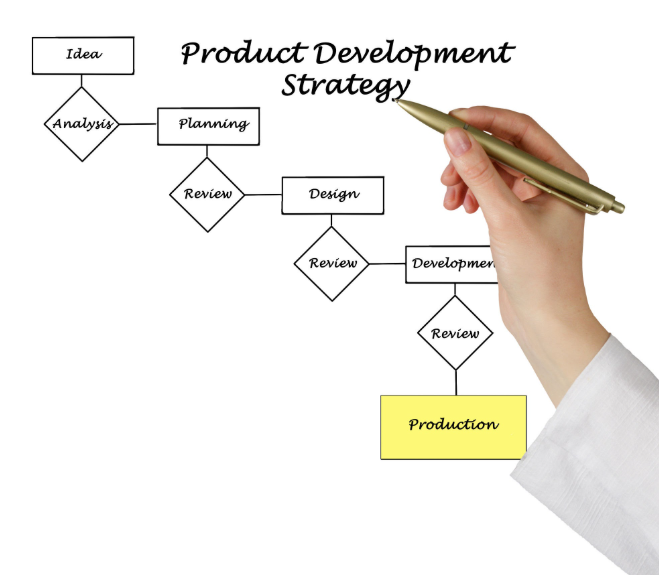
Once initial demand and unit metrics look promising, the development process transitions into industrial design and engineering. Early sketches quickly evolve into detailed 3D Computer-Aided Design models that define physical dimensions, internal structural support, and material requirements. At this point, understanding how to create a product requires adopting a design for manufacturability mindset. Every choice made on the computer screen directly impacts factory tooling complexity, assembly time, and scrap rates.
Engineers focus on consolidating components, standardizing hardware, and specifying realistic wall thicknesses or draft angles. Designing complex parts without considering how raw materials flow inside an injection mold or how automated assembly tools handle components leads to severe delays later. Collaborating early with manufacturing specialists helps align artistic vision with physical assembly realities, ensuring the final design transitions smoothly into mass production.
Structured Prototyping and Performance Iteration
A digital model cannot replace physical interaction. Building physical prototypes reveals flaws that software simulations frequently miss, such as awkward ergonomics, fragile snap fits, or unexpected material warping. Rather than jumping straight to a high-cost factory sample, experienced product developers advance through distinct prototype stages to systematically prove feasibility:
- Concept Models: Basic 3D prints or crude mockups crafted to verify scale, basic proportions, and general visual appeal.
- Functional Engineering Prototypes: Working samples constructed using production-intent materials to test mechanical strength, load capacities, and real-world durability.
- Pre-Production Samples: Fully finished prototypes built under real factory conditions to confirm tool accuracy and repeatable assembly quality before scaling volume.
Knowing how to create a product effectively depends on using these prototype stages as diagnostic tools. Each round of testing surfaces valuable data regarding structural integrity, surface finishes, and tolerance stack-ups. Modifying 3D files during prototype iteration costs a fraction of what factory tool rework demands, making rigorous testing essential before approving production funds.
Strategic Sourcing and Supplier Evaluation
Finding the right manufacturing partner involves far more than comparing baseline piece prices. Brands must evaluate prospective suppliers based on technical capability, communication consistency, existing quality management systems, and factory capacity. Whether partnering with domestic manufacturers or overseas contract factories, clear contracts regarding intellectual property protection, tooling ownership, and payment terms must be established prior to sending detailed engineering files.
During factory negotiations, developers must finalize comprehensive product requirement documents. These documents state exact material grades, dimensional tolerances, color codes, surface finish standards, and packaging guidelines. Leaving specifications vague forces factories to make educated guesses, which almost always results in quality variance or unexpected material substitutions during high-volume assembly.
Establishing Quality Standards and Mass Production
Before authorizing mass production, brands and factories must agree on an approved pre-production sample, often termed a golden sample. This physical unit serves as the absolute benchmark for quality control inspections, setting clear standards for what constitutes an acceptable product versus a defect. Quality control inspectors use this benchmark during pre-shipment inspections to examine dimensions, cosmetic finishes, functional performance, and drop-test resilience.
With quality controls established, the factory begins full production runs. During initial assembly runs, monitoring yield rates helps catch bottleneck operations or assembly errors before thousands of units are completed. Concurrently, logistics channels must be finalized, including freight forwarding, customs clearance documentation, and warehouse intake protocols. Integrating supply chain planning with final manufacturing schedules prevents expensive inventory holding costs or product launch delays.
Key Takeaways
Transforming a product concept into a market-ready asset relies on a disciplined, sequential execution model. Success is rarely about moving as fast as possible; rather, it stems from thoroughly completing each phase before committing capital to the next. Validating customer demand early protects financial resources, while designing specifically for factory assembly prevents costly engineering re-works. By rigorously testing prototypes, vetting manufacturing partners, and establishing unyielding quality control benchmarks, product creators can predictably transition from initial idea to commercial viability.
 Ask Carl C. how they got into entrepreneurship tips and you'll probably get a longer answer than you expected. The short version: Carl started doing it, got genuinely hooked, and at some point realized they had accumulated enough hard-won knowledge that it would be a waste not to share it. So they started writing.
What makes Carl worth reading is that they skips the obvious stuff. Nobody needs another surface-level take on Entrepreneurship Tips, Effective Marketing Strategies, Financial Management Techniques. What readers actually want is the nuance — the part that only becomes clear after you've made a few mistakes and figured out why. That's the territory Carl operates in. The writing is direct, occasionally blunt, and always built around what's actually true rather than what sounds good in an article. They has little patience for filler, which means they's pieces tend to be denser with real information than the average post on the same subject.
Carl doesn't write to impress anyone. They writes because they has things to say that they genuinely thinks people should hear. That motivation — basic as it sounds — produces something noticeably different from content written for clicks or word count. Readers pick up on it. The comments on Carl's work tend to reflect that.