
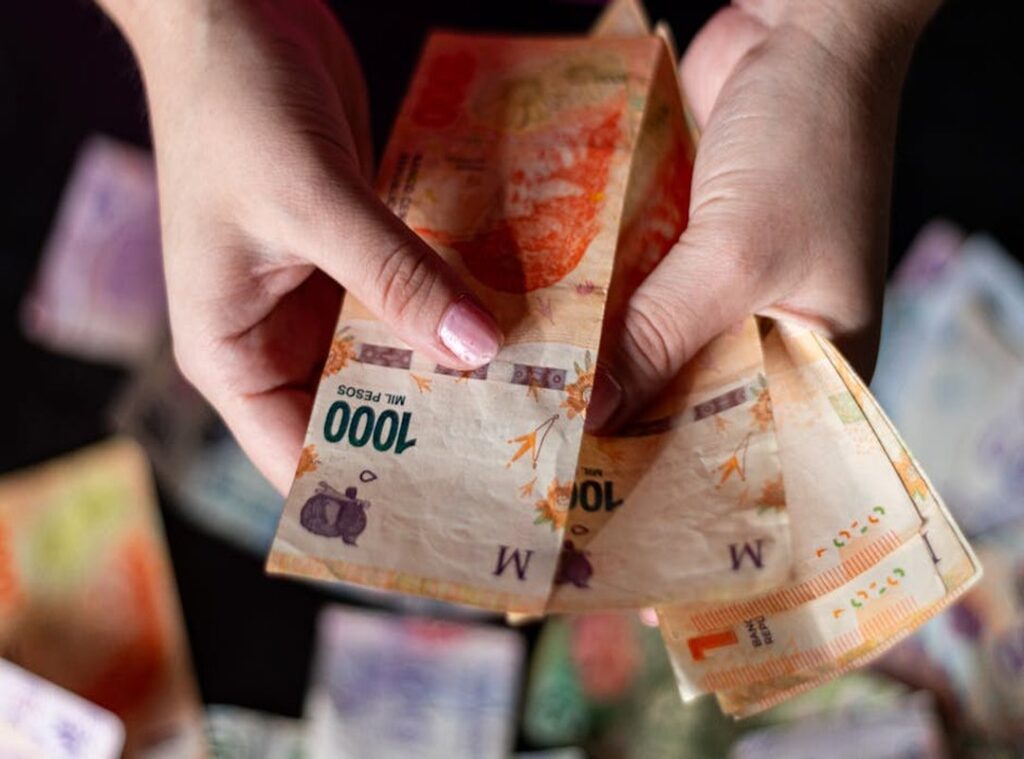
You want to know how much 60000 pesos chilenos a soles is, right? Well, the value changes daily.
Let’s get straight to it: 60,000 Chilean Pesos (CLP) in Peruvian Soles (PEN) today is [insert current, up-to-date exchange rate and resulting conversion amount here].
This guide isn’t just about giving you a number. I’ll show you how to calculate it yourself, where to find the best rates, and the smartest ways to exchange your money.
By the end, you’ll be able to convert any amount from CLP to PEN and avoid common fees and poor exchange rates.
Factors like economic stability and trade between Chile and Peru can cause these values to fluctuate. Let’s dive into the details.
What Drives the Chilean Peso to Sol Exchange Rate?
The exchange rate is just the price of one country’s currency in terms of another. For example, how many Peruvian Soles (PEN) you can get for one Chilean Peso (CLP).
The CLP/PEN rate is determined by supply and demand on the foreign exchange market, or Forex. It’s a bit like a stock market, where prices go up and down based on performance and confidence.
Interest rates set by the central banks of Chile and Peru play a big role. If one country raises its interest rates, it can make its currency more attractive, driving up the exchange rate.
Inflation data is another key factor. High inflation can devalue a currency, making it less desirable. This can cause the exchange rate to drop.
Political stability also matters. A stable government can boost investor confidence, which can strengthen a currency.
Using the official currency codes, CLP for Chilean Peso and PEN for Peruvian Sol, ensures accuracy when looking up rates. It’s important to use these codes to avoid confusion.
For instance, if you want to convert 60000 pesos chilenos a soles, using the correct codes will give you the most accurate result.
How to Calculate the Conversion from 60,000 CLP to PEN Step-by-Step
First, let’s get the formula out of the way. It’s simple: Amount in Chilean Pesos (CLP) x (Current CLP to PEN Exchange Rate) = Amount in Peruvian Soles (PEN).
Now, a quick example. If the current exchange rate is 0.0041, the calculation for 60,000 CLP would be: 60,000 * 0.0041 = 246 PEN.
The exchange rate number, like 0.0041, means one Chilean Peso is worth 0.0041 Peruvian Soles.
Always use a current exchange rate. Using an old one can lead to an inaccurate result.
You might wonder where to find live rates. We’ll cover that in the next section.
Quick tip: To do the reverse calculation (PEN to CLP), divide instead of multiply. For instance, if you have 246 PEN and the exchange rate is 0.0041, you’d calculate it as 246 / 0.0041 = 60,000 CLP.
Understanding 60000 pesos chilenos a soles is crucial for anyone dealing with these currencies. 60000 pesos chilenos a soles
Where to Find Today’s Most Accurate CLP to PEN Rates
When you’re looking to convert 60000 pesos chilenos a soles, it’s important to know the difference between the mid-market rate and the tourist rate. The mid-market rate is the real exchange rate you see on platforms like Google Finance, XE.com, or OANDA. It’s what banks use to trade with each other.
The tourist rate, on the other hand, is what you get at currency exchange services. They add a markup to cover their costs and make a profit. This rate is usually less favorable for you.
So, why do airport currency exchange kiosks offer such bad rates? High overhead and a captive audience. People often need cash in a hurry and don’t have many options, so these kiosks can charge more.
For the most accurate and official rates, check the websites of the Central Bank of Chile (Banco Central de Chile) and the Central Reserve Bank of Peru (Banco Central de Reserva del Perú). They provide the data straight from the source.
Before exchanging money, always compare the offered rate to the current mid-market rate on your phone. This way, you can see how large the service’s fee really is. It’s a simple step that can save you a lot.
The Best and Worst Ways to Exchange Your Currency

When you’re traveling or moving money internationally, exchanging currency can be a headache. Let’s break down the most common methods and help you pick the best one for your needs.
Banks.
Secure and reliable. But often have less competitive rates and higher fees than other options.
You might feel safe, but you’ll pay for it.
Currency Exchange Offices (Casas de Cambio).
Competitive rates, especially in city centers. Can be less secure, though.
There’s also a risk of counterfeit bills. So, keep an eye out.
Withdrawing from an ATM in Peru.
Convenient and often provides a rate close to the mid-market rate. Watch out for high ATM fees from both your home bank and the local ATM operator.
It’s a good option if you need cash fast.
Modern Money Transfer Services (e.g., Wise, Remitly).
Excellent rates, low transparent fees. Requires setting up an account, not for immediate cash exchange.
Great for larger amounts, like 60000 pesos chilenos a soles, but not if you need cash right away.
For convenience, use an ATM. For the best rate on a larger amount, use a money transfer service. It’s all about what you need at the moment.
Getting the Most Value for Your Pesos
Converting 60000 pesos chilenos a soles is straightforward once you understand the process. Always check the current mid-market exchange rate first. Then, compare the rates and fees of different exchange services.
A small difference in the exchange rate can mean a significant loss of money, especially on larger amounts.
Never exchange money without first doing a quick 30-second search for the day’s real rate on your smartphone. It’s the single best way to ensure you get a fair deal.
 Janez Luomana writes the kind of market analysis and trends content that people actually send to each other. Not because it's flashy or controversial, but because it's the sort of thing where you read it and immediately think of three people who need to see it. Janez has a talent for identifying the questions that a lot of people have but haven't quite figured out how to articulate yet — and then answering them properly.
They covers a lot of ground: Market Analysis and Trends, Business News and Insights, Entrepreneurship Tips, and plenty of adjacent territory that doesn't always get treated with the same seriousness. The consistency across all of it is a certain kind of respect for the reader. Janez doesn't assume people are stupid, and they doesn't assume they know everything either. They writes for someone who is genuinely trying to figure something out — because that's usually who's actually reading. That assumption shapes everything from how they structures an explanation to how much background they includes before getting to the point.
Beyond the practical stuff, there's something in Janez's writing that reflects a real investment in the subject — not performed enthusiasm, but the kind of sustained interest that produces insight over time. They has been paying attention to market analysis and trends long enough that they notices things a more casual observer would miss. That depth shows up in the work in ways that are hard to fake.
Janez Luomana writes the kind of market analysis and trends content that people actually send to each other. Not because it's flashy or controversial, but because it's the sort of thing where you read it and immediately think of three people who need to see it. Janez has a talent for identifying the questions that a lot of people have but haven't quite figured out how to articulate yet — and then answering them properly.
They covers a lot of ground: Market Analysis and Trends, Business News and Insights, Entrepreneurship Tips, and plenty of adjacent territory that doesn't always get treated with the same seriousness. The consistency across all of it is a certain kind of respect for the reader. Janez doesn't assume people are stupid, and they doesn't assume they know everything either. They writes for someone who is genuinely trying to figure something out — because that's usually who's actually reading. That assumption shapes everything from how they structures an explanation to how much background they includes before getting to the point.
Beyond the practical stuff, there's something in Janez's writing that reflects a real investment in the subject — not performed enthusiasm, but the kind of sustained interest that produces insight over time. They has been paying attention to market analysis and trends long enough that they notices things a more casual observer would miss. That depth shows up in the work in ways that are hard to fake.